
Thermal condition surveys
Targeted reviews of agreed electrical and mechanical assets under suitable operating conditions.
- Accessible electrical equipment
- Motors, bearings & rotating equipment
- Process equipment where thermography is appropriate
01 / RELIABILITY SERVICES
Thermography for accessible machine electrical components, motors, bearings, and production equipment. Connect thermal observations with operating context, documented priorities, and a practical next action.
Discuss an inspection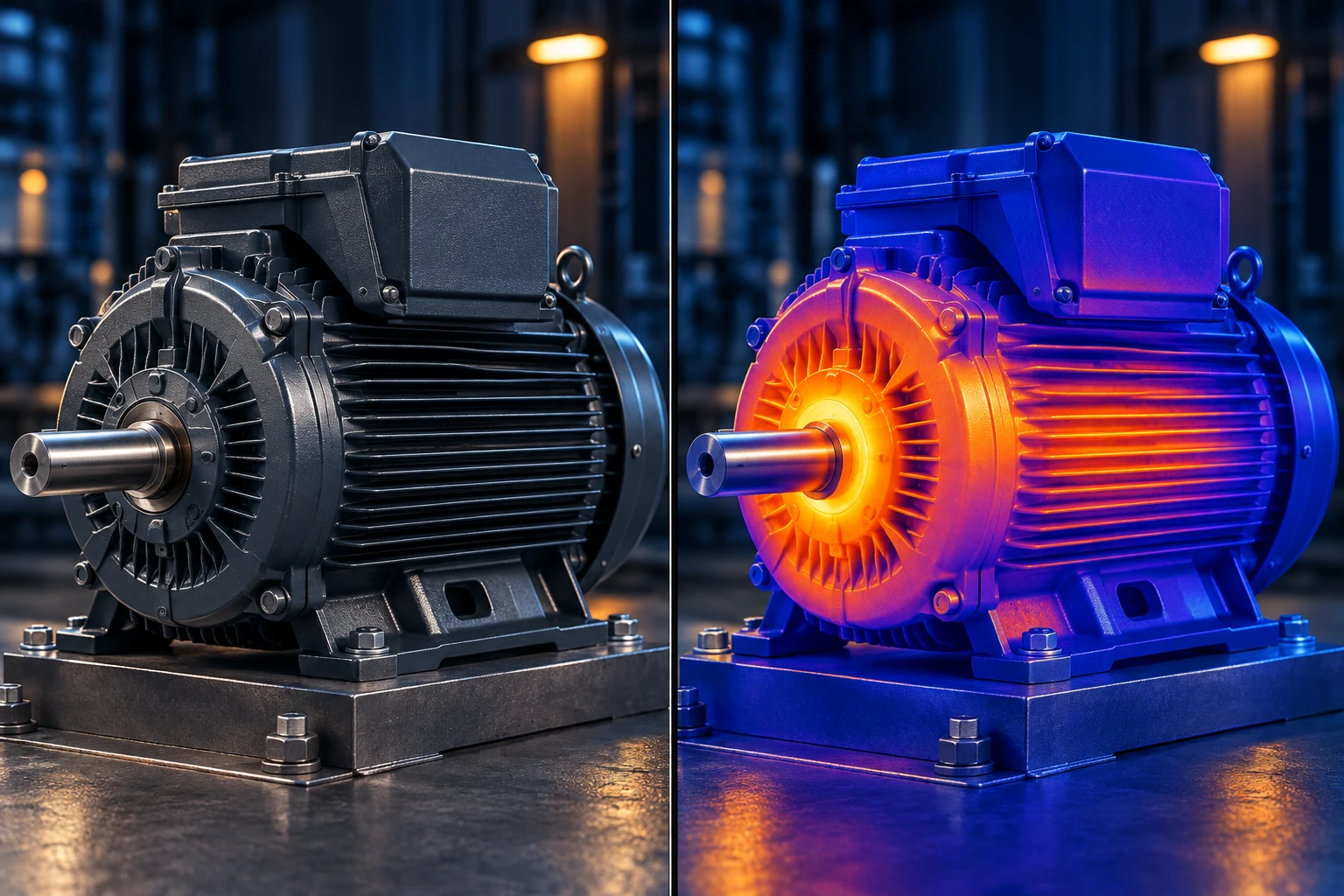 ILLUSTRATIVE HEAT VIEW · NOT A MEASURED THERMOGRAM
INDUSTRIAL THERMOGRAPHY
Infrared imaging can reveal temperature patterns that deserve a closer look: abnormal heating, differences between comparable components, and changes from an earlier survey.
The value comes from interpreting those patterns alongside asset condition, load, access, and operating context. A thermal image alone does not establish every cause or rule out hidden defects.
RELIABILITY SUPPORT
Targeted reviews of agreed electrical and mechanical assets under suitable operating conditions.
Documented observations with asset identification, operating context, and a clear recommendation for follow-up.
Connect repeat surveys and post-repair checks with equipment history, work orders, and recurring-failure review so findings lead to maintenance action.
THE DELIVERABLE
Before the visit, we agree on assets, reporting depth, and the question the survey needs to answer. The report distinguishes an observation from a confirmed diagnosis.
See the full working methodSUPPORTING YOUR MAINTENANCE PROGRAM
Thermal surveys can support equipment maintenance, safety programs, and insurer or customer requirements. The applicable standard, edition, reporting requirements, and personnel qualifications are established with you before accepting a standards-based scope.
A survey is not an OSHA compliance certification, a code enforcement inspection, or a guarantee against failure. NFPA 70B and NFPA 70E may inform a defined engagement; compliance with either is not implied by a stand-alone scan.
Read our service scopeBEFORE WE GET STARTED
Useful thermal comparisons often depend on normal operating load. Access must still be safe. We agree on the operating state and any qualified electrical support before the visit; unsafe or inaccessible assets are recorded as excluded or deferred.
It can identify patterns that justify investigation. Reflections, emissivity, load, line of sight, and ambient conditions can affect the result. Further electrical or mechanical tests may be needed to establish the cause.
The interval depends on asset risk, condition, operating history, manufacturer guidance, and any applicable maintenance program, insurer, or contract requirements. We scope recurring work around those factors rather than applying one interval to every facility.
Yes. Findings can lead to a separately agreed troubleshooting, repair, or maintenance scope, where the work fits our capabilities and legal authority. Required licensed trade work is identified before the work proceeds.
CONTACT PRIMARY INDUSTRIAL
Describe the machine, the problem, or the capability your team needs. The starting point can be one piece of equipment or a wider maintenance and training need.
Requests are reviewed before work is scheduled. For an immediate safety hazard, follow your facility’s emergency procedures.